
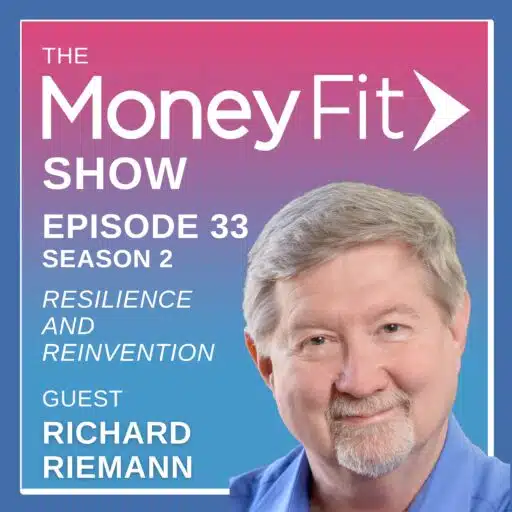
The Money Fit Show · Season 2, Episode 33
Resilience and Reinvention
Richard Riemann has reinvented his career more than once after job loss, industry change, financial strain, and divorce disrupted plans that had once seemed secure. He joins Todd Christensen to discuss spending during unemployment, negotiating debt, dealing with taxes after canceled debt, finding new uses for existing skills, and eventually creating accessible children's books for blind and deaf children.
Starting over without starting from nothing
Play the Season 2 finale directly through Spotify without leaving Money Fit.
Career reinvention can build on skills you already have
Richard Riemann describes a career that repeatedly changed direction. He worked for years in radio journalism, later moved into sales, experienced employers closing, faced difficulty finding new positions, narrated audiobooks, produced audiobooks, and eventually developed a nonprofit focused on making illustrated children's books more accessible.
Some of those transitions were financially difficult. Richard discusses continuing to spend as though he were employed after losing a job, going through divorce, negotiating debts, and later dealing with federal taxes connected to canceled debt.
His story also illustrates an important distinction between starting over and starting from nothing. Skills developed in broadcasting, narration, sales, publishing, communication, and production continued to have value even when the job or industry attached to those skills changed.
Topics covered in this episode
- Richard's transition from describing himself as an introvert to building a career around journalism, narration, communication, and storytelling.
- Creating accessible versions of illustrated children's books, including an accessible version of Winnie-the-Pooh.
- Reinventing his career after many years in radio journalism and finding that substantial experience could sometimes make employers view him as overqualified.
- Moving into a successful sales career and then having to respond again when the company employing him went out of business.
- The financial danger of continuing to spend at an employed-income level after a paycheck has stopped.
- Starting over financially and professionally after job loss and divorce changed both his household and career.
- Beginning audiobook narration from a small home recording setup and eventually moving from narration into audiobook production.
- Growing up in a household that often lived paycheck to paycheck and sometimes experienced utility shutoffs.
- The role Richard believes persistence, adaptability, and resilience played as his financial and professional circumstances repeatedly changed.
- Richard's experience negotiating some debts rather than filing bankruptcy and later learning that canceled debt can create federal tax consequences in some circumstances.
- Working with the IRS on a repayment arrangement after becoming responsible for taxes associated with his financial situation.
- Helping other people identify transferable skills and new directions, including a friend who developed photography work involving rescue dogs.
- Looking again at the work you enjoy, the skills you already have, and the problems you can solve when deciding what a new career or business might look like.
- Using collaboration and joint ventures to create opportunities that may be difficult to build alone.
- Being cautious about spending large amounts on programs that promise career or business transformation and considering experienced mentors, coaches, and lower-cost learning resources instead.
When income changes, change the plan quickly
A job loss or income reduction can become more expensive when spending continues as though nothing changed. Start with essentials, identify expenses that can be paused or reduced, review available savings, contact creditors before accounts become seriously delinquent, and estimate how long current resources can support the household. Career recovery may take time, so the financial plan should reflect the income you have now rather than the income you expect to regain.
Career reinvention, debt, and canceled-debt taxes
Richard's original Imagination Videobooks website now leads to his Audiobook Wizard work, which continues to include accessible videobooks and audiobook production. Consumers dealing with debt settlement or canceled debt should also understand that federal tax treatment depends on the specific circumstances.
Richard Riemann
Richard Riemann joined Todd Christensen as the founder of Imagination Videobooks, an audiobook narrator and producer, author, and former radio journalist.
Richard's broadcasting career included radio news work in major U.S. markets before later career changes led him into sales, voice work, audiobook narration, and audiobook production.
He created Imagination Videobooks to make illustrated children's books more accessible through narration, audio description, captions, sign language, and other formats. His current Audiobook Wizard work continues to include accessible audiobook and videobook production.