

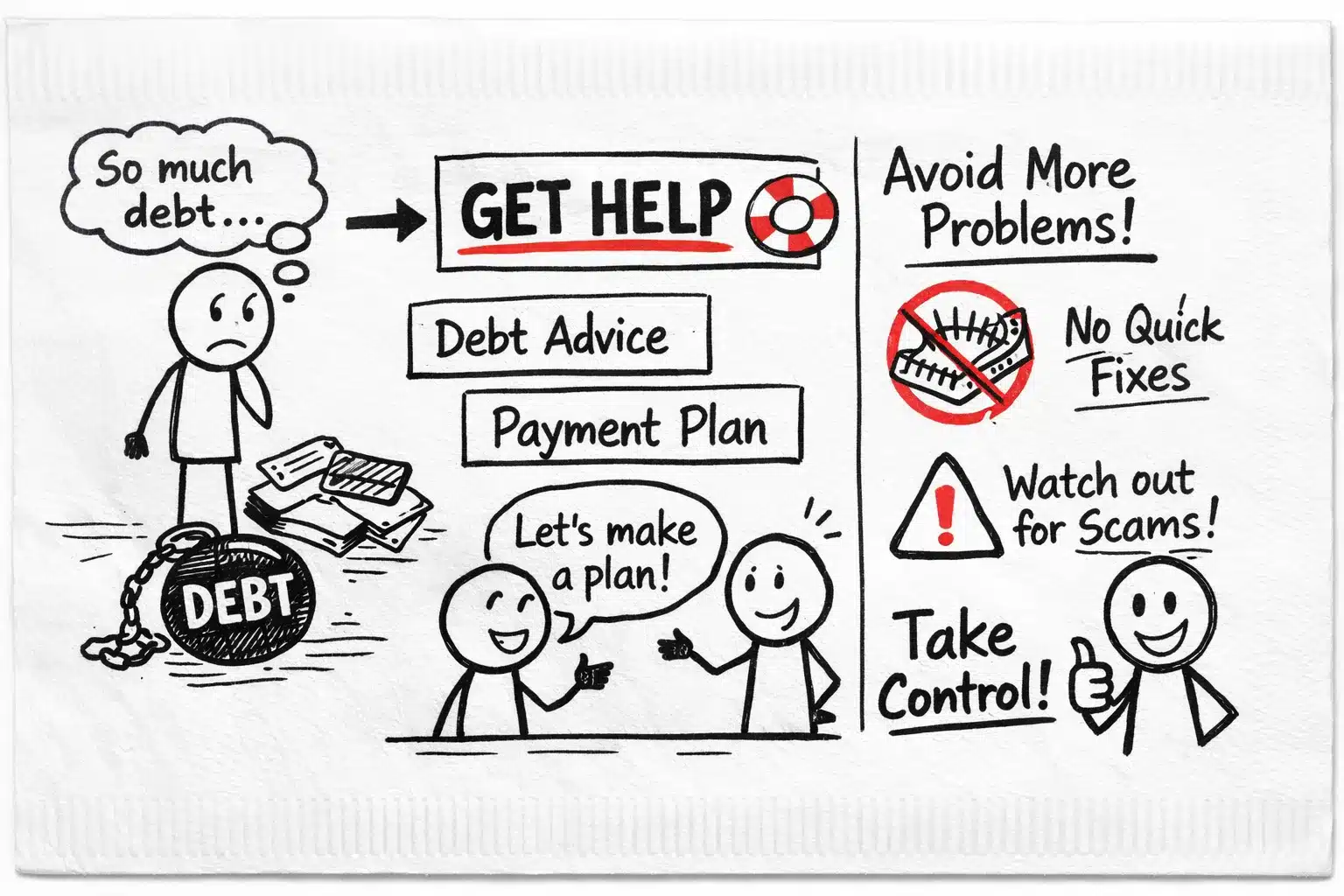
Your Options for Getting Help With Credit Card Debt
When credit card balances start taking over your budget, it is easy to feel stuck. Minimum payments may keep the account current for now, but they often do little to reduce the balance in a meaningful way. Interest keeps building, stress starts rising, and every new expense can feel heavier than it should.
The good news is that credit card debt help does exist. The challenge is knowing which kind of help makes sense for your situation. Some options can create breathing room. Some can lower monthly pressure. Others can make a difficult situation worse if you move too quickly or choose based on advertising instead of reality.
If you are looking for help with credit card debt, the best place to start is not with panic. It is with a clear look at your numbers, your habits, and the options in front of you. A calm plan usually beats a flashy promise.
Start with your card issuer before paying anyone else
If you are behind on payments or you can see trouble coming, start by calling the creditor directly. Ask whether hardship help, a temporary rate reduction, a payment arrangement, or fee relief may be available. This does not solve every problem, but it is often the most direct first step and it costs nothing to ask.
Before you call, gather the basics:
- Your most recent statements
- Your balances, interest rates, and minimum payments
- Your take-home monthly income
- Your core living expenses
- The amount you could realistically afford each month
Take notes during the call. Write down the date, the representative’s name, and any terms discussed. If they offer a change, ask for the details in writing. A simple paper trail can prevent confusion later.
Quick Wins Box
- Call your largest card issuer first
- Ask about hardship options before asking about anything else
- Stop using the card if you are trying to stabilize the balance
- Move essential recurring bills off any card that may be frozen or closed
Understand your situation before choosing a solution
Not every kind of debt help fits every household. A good solution depends on the shape of the problem. Before comparing programs or offers, ask yourself a few honest questions.
- How much can you reliably put toward debt each month?
- Are your balances spread across several cards or mainly on one or two?
- Are high interest rates the biggest problem, or is your whole budget strained?
- Is your credit still strong enough to qualify for better terms elsewhere?
- Can you stop adding new charges while you work on the problem?
- Do you need lower monthly payments, a cleaner structure, or both?
These questions matter more than most advertisements admit. A balance transfer may work for one person and be a mistake for another. A consolidation loan may look attractive on the surface but cost more over time. A Debt Management Plan may be the best middle path for someone who needs structure without taking on a new loan.
Mini-Scenario
Two people can both have $12,000 in credit card debt and still need very different solutions. One may have a strong credit score, steady income, and room to attack the balance quickly. The other may be juggling rent, groceries, and several cards with no room left in the month. The amount is not the whole story. The budget is what tells the truth.
Your main options for credit card debt help
Most people searching for help will end up comparing one or more of the options below. None of them are perfect. Each has tradeoffs. The goal is to find the path you can actually sustain.
1. Self-managed repayment with creditor assistance
If your income is stable and your debt is still manageable, direct help from the card issuer may be enough. You may be able to get a temporary payment adjustment, fee relief, or another short-term arrangement that buys time.
This tends to work best when the situation is still in the early stages and you have not fallen deeply behind. It can also be a good first move while you sort out whether a bigger solution is needed.
2. A balance transfer card
A balance transfer can help when your main problem is a high interest rate rather than a long-running budget shortfall. A lower promotional rate may give you a window to reduce the principal faster.
Still, this option only works when the math and the behavior line up. Transfer fees matter. Promotional periods end. If you cannot realistically pay down the balance during the lower-rate window, or if you keep using the old cards, this can create false hope instead of real progress.
3. A debt consolidation loan
A consolidation loan combines several balances into one loan with one payment. That can make repayment easier to track, and in some cases it can reduce the interest rate.
But one payment is not automatically a better deal. Loan fees, repayment length, and total cost all matter. A lower monthly payment can sometimes mean a longer payoff period and more interest paid overall. This option tends to work best for people with fair to good credit, stable income, and a strong plan not to run card balances back up again.
4. Nonprofit credit counseling and a Debt Management Plan
For many households, this is one of the strongest middle-ground options. A nonprofit credit counseling session can help you review your budget, understand where you stand, and compare realistic next steps. If it fits your situation, a Debt Management Plan may combine eligible unsecured debts into one structured monthly payment and may include creditor concessions that help make repayment more manageable.
This option may make sense when:
- You are juggling several credit card payments
- Interest rates are making it hard to gain traction
- You need a more structured plan, not another loan
- You want practical guidance without a sales-heavy pitch
A Debt Management Plan is not instant and it is not effortless. It takes commitment. But for households that need a steadier repayment path without adding new loan debt, it can be one of the more grounded options available.
To learn more about this route, see how a Debt Management Plan works and what to expect from credit counseling.
5. Debt settlement
This is often the option people are tempted by when they feel desperate, which is exactly why it deserves caution. Debt settlement usually involves allowing accounts to fall seriously behind while a company attempts to negotiate reduced payoffs. That can lead to credit damage, collection activity, possible tax consequences, and a long stretch of uncertainty.
There may be narrow situations where settlement is discussed, but it should not be treated as a casual first choice. If you are exploring it, slow down and make sure you understand the consequences clearly before moving forward.
How to choose the option that fits your situation
Here is a practical way to think about it:
- If your credit is still strong and your budget is stable, a balance transfer or consolidation loan may be worth comparing carefully.
- If you mainly need relief from high interest and multiple monthly payments, nonprofit credit counseling and a Debt Management Plan may be the better fit.
- If you are only slightly behind, direct hardship help from the card issuer may buy needed time.
- If the situation is already badly broken and other paths have failed, settlement may be discussed, but only with full awareness of the tradeoffs.
In plain language, the best option is usually the one you can keep up with month after month. Not the one with the flashiest claims. Not the one that sounds fastest. The one that fits your life well enough to hold.
If you want a broader look at repayment paths, you may also want to read Credit Card Debt Consolidation Options and How to Pay Off Credit Card Debt.
Watch for debt relief scams and pressure tactics
When people are stressed about money, they are more vulnerable to companies that sell urgency instead of help. Be careful with any company that promises to erase debt quickly, pressures you to act immediately, asks for large upfront fees, or avoids giving clear written information.
Slow down if you hear things like:
- “We can fix this fast”
- “Do not talk to your creditors”
- “Sign now and we will explain the rest later”
- “This will not affect your credit”
Real help should be understandable. It should leave room for questions. It should not depend on panic.
If high-cost borrowing is part of the problem, you may also find it helpful to review payday loan alternatives and safer next steps.
A simple 30-day reset if you feel overwhelmed
If the situation feels heavy, do not try to solve everything in one night. Use the next month to stabilize and sort things out.
Week 1
- List every card balance, minimum payment, APR, and due date
- Call your largest creditors
- Stop adding new charges where possible
- Create a bare-bones weekly spending plan
Week 2
- Review whether hardship help is available
- Compare consolidation, balance transfer, and nonprofit counseling options
- Write down the real monthly cost of each path
Week 3
- Choose the most realistic option
- Ask questions until you understand the details
- Get terms in writing before you commit
Week 4
- Begin the plan
- Adjust your household budget to support it
- Track payments and stay consistent
If building a workable budget is part of the challenge, see How to Budget for a practical place to start.
When nonprofit credit counseling may make the most sense
If you are unsure what to do next, nonprofit credit counseling can be a strong starting point. It can help you sort out what is realistic, what is risky, and what may genuinely reduce the pressure without pushing you into a new mistake.
The goal should not be to force everyone into the same answer. The goal should be to understand your situation clearly enough to choose the right one. That is where good counseling can help.
Final thoughts on getting help with credit card debt
There is nothing weak about needing help with credit card debt. The bigger mistake is drifting, delaying, or grabbing the first promise that sounds easy.
Start with your creditor. Get clear on your numbers. Compare your options carefully. Be cautious with companies that lean on pressure or hype. And if a structured nonprofit path fits your situation, do not be afraid to consider it.
Steady progress still counts. In a situation like this, that matters more than flash.