

Veterans Are Not Judged by a Totally Different Credit System
There is no separate version of “bad credit” reserved for veterans. A missed payment, a high balance, or a collection account can still hurt a veteran’s application the same way it hurts a civilian borrower’s. That part does not change.
Where things can change is in the loan program itself. Most personal loans and auto loans are still private-lender products, which means the lender’s own underwriting rules usually drive the decision. VA-backed home loans are different. They can give lenders more room to look at the full picture instead of treating a credit score like the whole story.
If a veteran gets turned down quickly, that does not always mean the file was fully considered. Sometimes it simply means an automated system did not like the application. With the right VA lender, the next step may be manual underwriting, which is just a human review instead of a software-only answer.
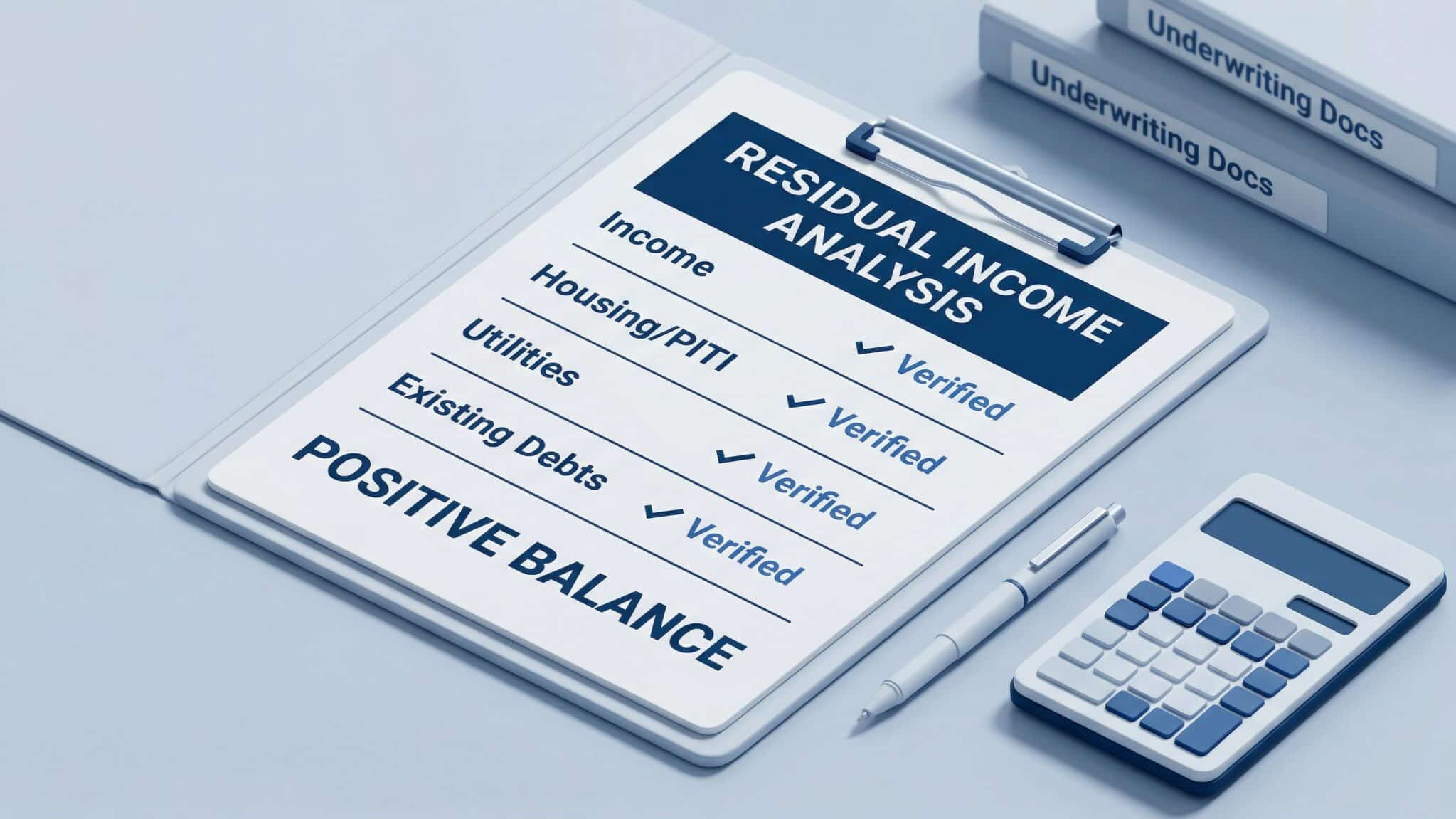
Residual Income in Plain English
Residual income sounds technical, but the idea is simple. It is the money you still have left each month after taxes, housing costs, debt payments, and other major obligations are covered.
In other words, it is the part of your budget that still has to handle groceries, gas, clothing, medicine, school costs, and the many ordinary surprises real life throws your way.
A quick example: If your household brings home $5,800 a month and your required bills add up to $4,300, your residual income is $1,500. That leftover amount tells an underwriter more about whether a mortgage fits your real life than a score alone ever could.
That is why the concept matters so much for VA home loans. It is not just a question of whether you can squeeze through on paper. It is a question of whether there is still enough room left in the month to live.
Where the Veteran Advantage Actually Shows Up
This is the part many readers miss. Veterans do not usually get a special private-lender pass for personal loans or auto loans. Those lenders still care about score, debt load, income, payment history, loan amount, and sometimes collateral or down payment.
The stronger structural difference tends to show up with VA-backed home loans. The VA does not set a universal minimum credit score, and some lenders are willing to look harder at recent payment behavior, reliable income, and monthly breathing room instead of treating one low score as the end of the road.
That does not mean approval is easy. It means the file may still deserve a real review.
What Lenders May Review Beyond the Credit Score
When credit is bruised, lenders usually want evidence that the problem is either improving or contained. In plain language, they want to know whether the rough patch is behind you, or still unfolding.
- Recent payment history: The last 12 months can matter a lot. A clean recent stretch may carry more weight than an older hardship.
- Stable income: Active-duty income, retirement pay, disability compensation, or steady civilian earnings can all help show reliability.
- Housing history: Verifiable on-time rent is often one of the strongest signs that you can handle a mortgage payment.
- Debt load: High minimum payments can squeeze the monthly budget even when income looks decent on paper.
- Cash reserves: Even modest savings after closing or after purchase can make a file look steadier.
- Context: A well-documented hardship, such as a medical event or a temporary disruption, may help explain why the credit dipped.
What Is the Minimum Credit Score for a VA Home Loan?
The VA itself does not set a universal minimum credit score. That is the clean answer. The messier real-world answer is that lenders usually do set their own standards, often called overlays.
That is why one veteran may hear “no” from one lender and “let’s take a closer look” from another. Many lenders want scores around the low 600s, and 620 is a common benchmark, but that is not a hard VA rule across the full market.
For a veteran with weaker credit, lender shopping matters. Not every lender is equally comfortable with manual underwriting, and not every lender interprets risk the same way.
VA Loans and Conventional Loans Are Not Built the Same Way
When credit is shaky, conventional loans often get expensive fast. Lower scores can bring higher rates, stricter pricing, and private mortgage insurance. That combination can make a payment harder to live with even if the loan technically gets approved.
VA loans are often more forgiving. They do not require monthly PMI, and some lenders will look more carefully at the household budget instead of treating the score as the only meaningful number. That can make a real difference for borrowers who have reliable income but a credit history that still needs work.
Bad credit can still affect a VA loan’s interest rate. The VA does not publish one universal penalty for lower scores, but lenders still price risk. In practice, a weaker score can mean a higher rate, stricter terms, or fewer lender options. Even so, the total monthly cost can still compare favorably to conventional financing because there is no PMI payment attached to the loan.
How a Veteran With Bad Credit Can Improve the Odds
If you are a few months away from applying, do not obsess over fixing every old mark at once. Focus on the moves that help underwriting see a stronger file now.
- Get current and stay current. A clean recent payment history matters more than good intentions.
- Lower revolving balances. Reducing credit card utilization can sometimes help faster than chasing older accounts first.
- Keep your housing history easy to prove. Bank statements, canceled checks, or a clean payment ledger can help.
- Write a short factual explanation for one-time problems. Keep it honest, calm, and documented.
- Avoid new debt before applying. New balances can hurt both the score and the monthly budget.
- Talk to lenders who actually understand VA loans. A lender that does a lot of VA lending is not the same as a lender that merely offers it.
For personal and auto loans, the strategy is similar, but the decision is usually more private-lender driven. A smaller requested loan, a down payment, cleaner recent history, or stronger income documentation may do more for approval than simply hoping veteran status changes the math.
Is debt tightening the room in your budget?
High-interest balances can make loan approval harder than it needs to be.
If credit card payments are eating up the money you need each month, nonprofit credit counseling may help you lower interest, organize repayment, and create more breathing room before you apply for a loan. That can matter for any borrower, but especially for veterans and active-duty service members trying to strengthen a tight monthly budget.
Money Fit is a nonprofit organization focused on financial education and counseling. We do not charge any fees to active-duty service members. For veterans who enroll, we waive half of the enrollment fee.